- All
- Product Name
- Product Keyword
- Product Model
- Product Summary
- Product Description
- Multi Field Search
| Inlet Size: | |
|---|---|
| Outlet Size: | |
| Max Feeding Size: | |
| Capacities: | |
| Quantity: | |
HP
QR
100
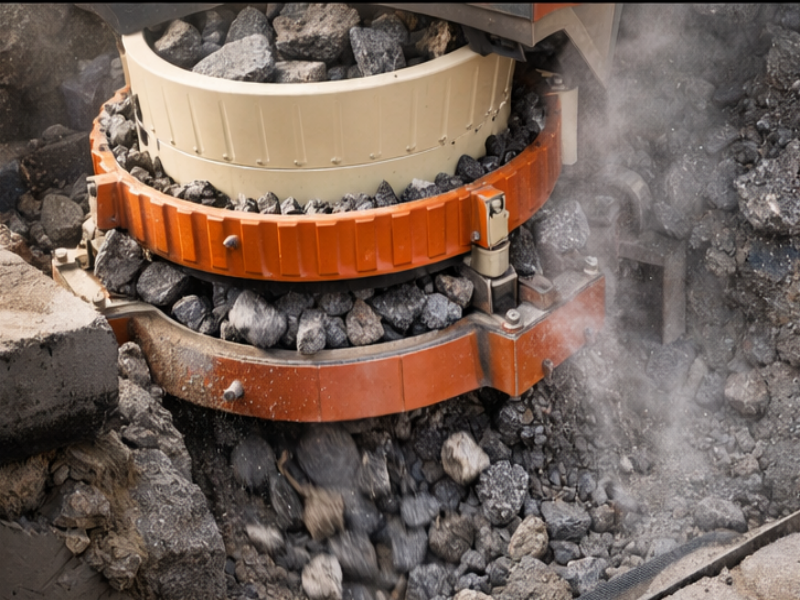
Qirun supplies HP Series cone crushers for mining, quarrying, and aggregate production. Designed for secondary and tertiary crushing, these machines reduce granite, basalt, limestone, iron ore, and other suitable rock materials through continuous compression.
The cone crusher uses a moving mantle and stationary bowl liner to form the crushing chamber. Its eccentric mechanism generates the crushing motion, while adjustable discharge settings help control the final product size.
With a published series capacity range of 50–1200 T/H, Qirun provides cone crusher equipment inquiries for different production requirements. Final machine specifications, configuration, and operating capacity depend on the selected model and application conditions.
Parameter | Specification |
|---|---|
Product Name | HP Series Cone Crusher |
Brand | Qirun / QR |
Product Model | HP |
Product Code | 100 |
Crusher Type | Stationary Cone Crusher |
Crushing Method | Compression Crushing |
Crushing Stage | Secondary / Tertiary |
Published Capacity Range | 50–1200 T/H (Series Range) |
Maximum Feed Size | Model Dependent; To Be Confirmed |
Minimum Discharge Size | 13 mm (Published Value; Model Dependent) |
Crushing Chamber | According to Machine Configuration |
Closed Side Setting (CSS) | Adjustable; Model-Specific Range |
Main Wear Parts | Mantle, Bowl Liner |
Drive System | According to Selected Model |
Motor Power | To Be Confirmed |
Applications | Mining, Quarrying, Aggregate Processing |
Feed Materials | Granite, Basalt, Limestone, Suitable Mineral Ores |
Equipment Dimensions | According to Model |
Machine Weight | According to Model |
Published capacity and discharge figures are reference values from the current product listing. They do not represent guaranteed performance for every machine. Feed size, motor power, CSS, chamber configuration and actual throughput require model-specific confirmation.
Cone crushers reduce material through continuous compression between the moving mantle and stationary bowl liner.
The eccentric mechanism causes the mantle to move around the crushing chamber, compressing incoming rocks as they travel downward.
This operating principle is suitable for secondary and tertiary crushing of hard and abrasive materials.
The crushing chamber determines the available feed opening, material reduction behavior, and discharge characteristics.
Different chamber configurations can accommodate different feed sizes and production requirements.
The correct mantle and bowl liner profiles must match the actual machine model and intended operating conditions.
The HP Series is presented for mining and aggregate processing operations requiring continuous rock reduction.
Actual production capacity depends on:
Feed size distribution
Material hardness and abrasiveness
Closed side setting
Crushing chamber configuration
Feed consistency
Motor power and operating speed
Final performance should be confirmed through the technical specifications of the selected machine.
Hydraulic cone crusher configurations may provide adjustment and overload protection functions, depending on the equipment design.
These features can support discharge setting adjustment and protection of major components from excessive crushing loads.
The exact hydraulic functions, operating controls, and protection systems must be confirmed for each model.
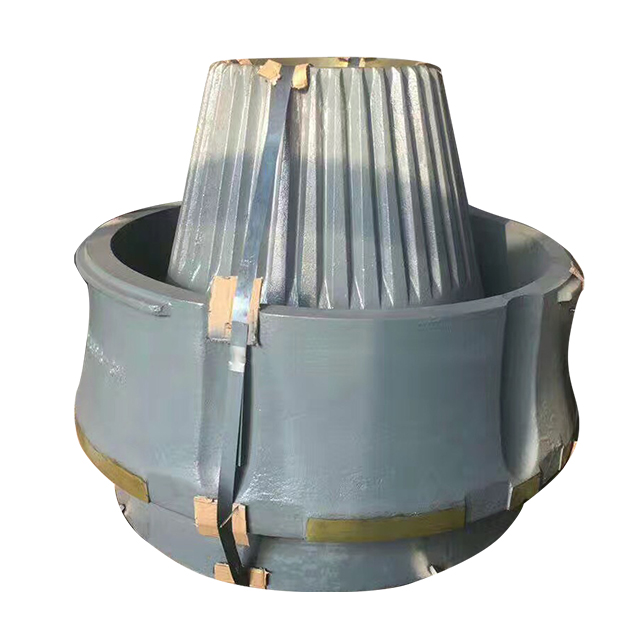
Mantles and bowl liners form the main crushing surfaces of a cone crusher.
These components experience continuous compressive loading and abrasive contact with rock materials.
Qirun also supplies wear-resistant cone crusher castings, allowing customers to inquire about replacement liners alongside complete crushing equipment.
Component | Main Function |
|---|---|
Mantle | Moving crushing surface that compresses feed material |
Bowl Liner / Concave | Stationary crushing surface inside the chamber |
Main Shaft | Supports the moving crushing assembly |
Eccentric Assembly | Generates the gyrating crushing motion |
Main Frame | Supports the crusher structure |
Drive Assembly | Transfers power to the crushing mechanism |
Adjustment System | Controls the crushing chamber setting |
Hydraulic System | Provides model-dependent adjustment and protection functions |
Component arrangement and available systems vary according to machine design.
The current product listing states a broad capacity range of 50–1200 T/H.
Because this covers a range of production requirements, the capacity of an individual model should be evaluated separately.
Actual throughput varies with material properties, chamber geometry, machine power, and operating settings.
Maximum feed size is determined by the selected crushing chamber and equipment configuration.
Oversized material can cause bridging, unstable operation, or damage to the crushing chamber.
For quotation purposes, customers should provide the maximum feed size and typical feed distribution.
The closed side setting (CSS) is the minimum distance between the mantle and bowl liner during the crushing cycle.
Adjusting the CSS influences product gradation and crushing performance.
The final product size distribution also depends on feed characteristics, chamber type, and operating conditions. CSS should not be treated as a guaranteed final particle size.
Motor power is an important factor in cone crusher performance.
The required power depends on crusher size, crushing duty, and selected machine configuration.
Specific motor ratings, supply voltage, and drive requirements should be confirmed before procurement.
Cone crushers are widely used in mining operations to reduce material after primary crushing.
They can process suitable iron ore, copper ore, and other mineral feed materials before further crushing, screening, or grinding.
Granite and basalt can produce demanding abrasive conditions.
Compression crushing is commonly used for these hard rock applications.
Suitable mantle and bowl liner materials help the crusher operate under the intended load and wear conditions.
Aggregate plants use cone crushers to reduce primary-crushed rock into smaller fractions for construction applications.
Crushing chamber selection and discharge settings influence the size distribution of the output.
Cone crushers can be used in selected limestone crushing circuits where the feed size and required reduction ratio are appropriate.
The machine configuration should match the limestone characteristics and downstream screening process.
Cone crushers are used in crushing and screening plants that produce aggregates for road construction, asphalt, and concrete.
The final aggregate gradation and particle shape depend on the complete crushing process, feed characteristics, and crusher settings.
Cone crushers require periodic inspection and replacement of wear components.
The mantle and bowl liner are particularly important because they form the active crushing surfaces.
Uneven wear, excessive liner loss, or incorrect installation can affect chamber geometry and operation.
Routine maintenance should follow the machine manufacturer's requirements and may include inspection of:
Mantle and bowl liner wear
Main shaft and eccentric components
Lubrication system
Hydraulic components, where fitted
Drive assembly
Fasteners and mounting surfaces
Crusher discharge setting
Qirun supplies cone crusher wear-resistant castings, including mantle and concave components for compatible equipment.
Replacement part compatibility should be confirmed according to the selected crusher model and original part specifications.
Qirun supports cone crusher inquiries according to customer project requirements.
For complete equipment orders, the machine model and configuration should be confirmed using the intended production conditions.
HP Series cone crusher specifications
Required production capacity
Feed and discharge size requirements
Crushing chamber configuration
Motor and power supply requirements
Replacement mantle and bowl liners
Equipment dimensions and installation information
Spare parts and maintenance requirements
Please provide:
Required crushing capacity (T/H)
Maximum and typical feed size (mm)
Feed material and rock characteristics
Required output size or gradation
Crushing stage: secondary or tertiary
Available power supply
Installation location and project requirements
This information helps establish the equipment specification required for a technical and commercial quotation.
Looking for a cone crusher for mining, quarrying, or aggregate processing?
Qirun supplies crushing equipment inquiries and wear-resistant cone crusher components for industrial applications.
Send us your required capacity, feed size, output specifications, and project information to discuss available HP Series crusher configurations.
Email: vip@qrcrusher.com
Request a Quote | Submit Your Crushing Requirements