- All
- Product Name
- Product Keyword
- Product Model
- Product Summary
- Product Description
- Multi Field Search
Views: 0 Author: Site Editor Publish Time: 2026-07-14 Origin: Site
Global demand for construction aggregates and recycled concrete is surging, driven by massive infrastructure projects and urban expansion. However, entering the material processing industry presents a high capital barrier. While gross revenues in aggregate production can be substantial, miscalculating capital expenditures, operating expenses, and equipment downtime frequently leads to negative returns and failed ventures. Success requires a rigorous, evidence-based framework for evaluating the profitability of a rock crushing operation. This means understanding regional market dynamics, controlling operational costs, and optimizing the critical role of primary reduction equipment like the jaw crusher. In this guide, we break down the economics of aggregate production, showing you exactly how to build a profitable crushing operation from the ground up by managing your site logistics, equipment selection, and daily operational metrics.
Profitability is Hyper-Local: Margins are dictated by the regional cost of raw material acquisition, local aggregate demand, and transportation radiuses (typically under 50 miles).
The Rental-to-Ownership Pivot: Transitioning from renting equipment to owning a primary jaw crusher is the most significant catalyst for long-term profit scaling for mid-sized contractors.
Dual-Revenue Models Drive Growth: Concrete and asphalt recycling often yield higher profit margins than virgin rock crushing due to the collection of inbound tipping fees combined with outbound material sales.
Equipment Selection Defines OPEX: The efficiency, mobility, and maintenance requirements of your primary jaw crusher directly impact your cost-per-ton and overall operational viability.
Hidden Costs Erode Margins: Failure to accurately model wear parts replacement, fuel consumption, standardized operating procedures, and environmental compliance (dust/noise permitting) is the primary cause of profitability loss.
The revenue structure of a rock crushing operation depends heavily on the source material. Quarrying natural stone involves drilling, blasting, and extracting virgin rock from the earth. This model requires securing mineral rights and managing high extraction costs before the material ever reaches the primary reduction stage. You are dealing with geological surveys, explosive permits, and heavy earthmoving just to get the rock to the plant. Conversely, processing construction and demolition waste operates on a different financial paradigm. The acquisition cost of raw materials in recycling is often negligible or even negative. Urban demolition projects constantly generate concrete rubble, asphalt, and brick. By positioning your operation to receive this waste, you eliminate the extraction costs associated with traditional quarrying.
| Operational Model | Material Acquisition Cost | Primary Feedstock | Site Requirements |
|---|---|---|---|
| Virgin Quarrying | High (Drilling, Blasting, Extraction) | Limestone, Granite, Basalt | Remote, large acreage, mineral rights required |
| C&D Recycling | Negative (Revenue generated via tipping fees) | Concrete, Asphalt, Brick, Block | Urban proximity, industrial zoning, smaller footprint |
Accepting concrete rubble generates immediate revenue through tipping fees before the material is even processed. Contractors need a place to dump demolition debris, and landfills charge steep premiums for heavy materials. By offering a localized dumping site for clean concrete, crushing operators collect a fee for every load received. This inbound revenue stream effectively subsidizes the operational costs of the crushing phase. Once the material is processed through a jaw crusher and screened into usable aggregate, it is sold back into the market. This dual-revenue model creates a highly resilient profit margin that protects the business during seasonal construction slowdowns.
Many contractors enter the crushing space by hiring third-party crushing services or renting equipment. While this minimizes upfront risk, rental fees quickly erode profit margins as production volumes increase. The financial trigger point for buying a dedicated machine usually occurs when rental costs over a six-to-eight-month period begin to equal a substantial down payment on new equipment. Evaluating rent-to-own pathways allows operators to protect cash flow during the proof-of-concept phase. Once a steady supply of feed material and a reliable customer base are established, transitioning to ownership becomes the most significant step in scaling long-term profitability.
Aggregate is a high-volume, low-margin commodity, meaning freight costs dictate competitive pricing. A crushing operation must be located near urban development or major infrastructure projects to remain viable. The success criteria for location heavily depend on the transportation radius, which is typically under 50 miles. If a truck has to haul crushed stone further than this distance, the transportation costs will exceed the value of the material itself. Establishing a processing yard close to both the source of demolition waste and the final construction site ensures that freight costs remain low, keeping your recycled aggregate competitively priced against virgin stone.Capital Expenditures (CAPEX): The Cost of Entry
The upfront investment required for a commercial-grade primary reduction machine is substantial. The initial costs vary significantly based on targeted tons-per-hour production rates. Compact units are designed for tight urban job sites and lower volumes, while mid-size models balance mobility with higher throughput. Heavy-duty models are engineered for continuous quarry operations and massive demolition sites. Selecting the right tier of equipment requires a realistic assessment of your daily production goals and the physical constraints of your typical job sites. Over-sizing your equipment ties up capital unnecessarily, while under-sizing leads to severe operational bottlenecks.
Evaluating CAPEX trade-offs between track-mounted mobile crushers and stationary plants dictates your entire site layout. Track-mounted mobile units require a higher upfront investment but offer significantly lower transport and setup costs. They can be driven directly to the material face or demolition site, eliminating the need for secondary on-site hauling. Stationary plants demand a lower initial equipment cost but require high site-development capital, concrete foundations, and continuous material transport from the extraction point to the plant.
Assess the lifespan of the material source (short-term demolition vs. multi-decade quarry).
Calculate the daily cost of hauling material from the face to a stationary plant.
Compare the hauling costs against the premium paid for a track-mounted mobile unit.
Evaluate the site's permitting restrictions regarding permanent structures versus temporary mobile equipment.
Mismatching your primary reduction equipment to the feed material carries severe financial penalties. For example, feeding wet, sticky, clay-heavy material into a standard compression chamber will cause immediate clogging. This leads to pancake compaction, where the material forms a solid block inside the chamber, requiring the operation to shut down for manual clearing. Every minute the machine is turned off, revenue is lost. Understanding the geological profile of your rock or the composition of your demolition debris is mandatory before committing capital to a specific machine configuration.
A crushing plant cannot operate in isolation. You must account for the necessary supporting fleet to maintain continuous production. This includes excavators equipped with hydraulic thumbs or pulverizers for feeding the hopper, wheel loaders for managing stockpiles and loading outbound trucks, and screening plants for sizing the final product into marketable specifications. Calculating total fleet acquisition costs requires looking at the entire processing ecosystem, ensuring that your loading and stockpiling equipment can match the tons-per-hour output of your primary crusher.
Energy consumption is one of the largest daily operating expenses in aggregate processing. Heavy equipment energy costs vary based on the power source: traditional diesel, diesel-electric hybrids, or fully electric stationary setups. Diesel engines provide unmatched mobility but are subject to fluctuating fuel markets. Diesel-electric models offer improved fuel efficiency by using a diesel generator to power electric drives, reducing mechanical power loss. Establishing benchmarks for calculating fuel consumption per ton of material processed is vital for accurate bidding and margin protection. Daily greasing of main bearings and toggle seats is non-negotiable to prevent catastrophic mechanical failures.
Operator training and standardized feeding protocols are essential for preventing un-crushable materials from damaging the equipment. Excavator operators must be trained to identify and remove massive steel beams or oversized boulders before they enter the hopper. Consistent feeding patterns also impact fuel consumption and wear. Choke feeding, where the chamber is kept consistently full, maximizes rock-on-rock crushing and improves efficiency. Conversely, trickle feeding causes uneven wear on the jaw dies and reduces the overall quality of the output material. A well-trained operator watching the feeder speed can increase daily output by up to twenty percent simply by maintaining a consistent material flow.
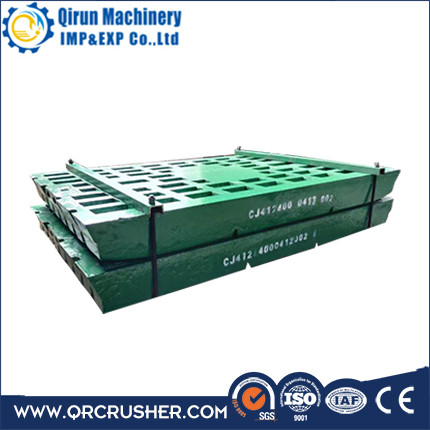
The lifecycle and replacement costs of high-wear components directly impact OPEX. Jaw dies, cheek plates, toggle plates, and conveyor belts require regular inspection and replacement. Processing highly abrasive materials, such as river rock or concrete heavily laden with rebar, accelerates wear and increases maintenance frequency. Implementing a strict preventative maintenance schedule ensures that wear parts are rotated or replaced before they fail catastrophically, preventing unplanned downtime and protecting the structural integrity of the machine.
Beyond fuel and steel, operators must account for labor, insurance, and debt servicing. Skilled operators command competitive wages, and their expertise is required for maximizing throughput and preventing equipment damage. Heavy equipment insurance premiums are necessary to protect against job site accidents, fire, and theft. For financed machinery, monthly debt servicing must be factored into the minimum daily production requirements to ensure the operation remains cash-flow positive during seasonal slowdowns.
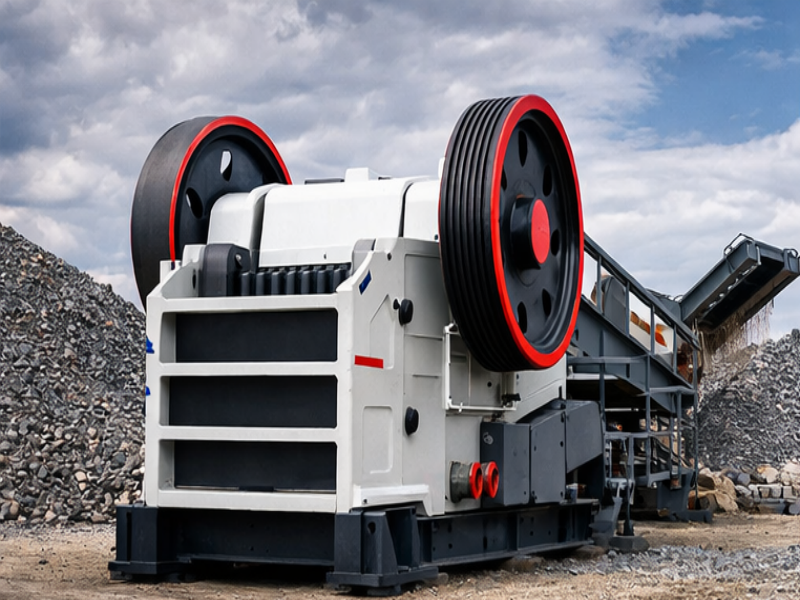
The mechanics of compression crushing make it the most cost-effective method for the primary reduction of hard rock and concrete. The machine operates by compressing material between a stationary plate and a moving plate, fracturing the rock along its natural fault lines. This method requires less energy and generates fewer fines than impact crushing. When processing abrasive materials, the compression method results in significantly lower wear-part costs compared to blow bars in an impactor, making the jaw crusher the industry standard for tough, abrasive feedstocks. It handles rebar-laden concrete exceptionally well, provided a cross-belt magnet is installed on the discharge conveyor.
Evaluating technical parameters is necessary to align the equipment with the target feed. Key specifications include the gape (the top opening), the width of the crushing chamber, the eccentric throw (the movement of the pitman), and the toggle plate angle. These parameters dictate how aggressively the machine attacks the rock. High-compressive-strength materials require a robust pitman and a specific nip angle to prevent the rock from boiling out of the chamber. Moisture content and abrasiveness also dictate the type of corrugation needed on the jaw dies.
A decision framework for sizing the feed opening must be based on the maximum size of the incoming rubble. The gape and width must comfortably accept the largest pieces of material without bridging or blocking the hopper. Furthermore, the relationship between the Closed Side Setting (CSS) and production bottlenecks must be managed. Tightening the CSS produces a smaller final product but reduces the overall tons-per-hour output and increases wear. Operators must balance the desired product size with the need to maintain high volumetric throughput.
Even the most robust equipment will eventually require replacement parts. Evaluating Original Equipment Manufacturer (OEM) support, warranty terms, and the local availability of spares is critical to minimizing catastrophic downtime. If a toggle plate breaks or a main bearing fails, waiting weeks for an overseas shipment will destroy a project's profitability. Prioritize manufacturers and dealers that maintain extensive local parts inventories and offer rapid field-service deployment. Ask for references from other local operators to verify the dealer's response times.
Securing air quality permits and adhering to local noise ordinances are harsh realities of the aggregate processing business. Dust suppression systems, typically utilizing high-pressure water spray bars at transfer points, are mandatory in almost all jurisdictions. Noise regulations may dictate operating hours or require the construction of sound-dampening berms around the processing yard. The costs associated with compliance must be modeled into the initial business plan to avoid the severe risk of operational shutdowns and regulatory fines. Do not purchase equipment until you have verified that your intended site can be permitted for industrial crushing.
The construction industry is inherently cyclical, exposing crushing operations to seasonal slowdowns and fluctuations in raw material supply. Winter weather can halt demolition projects, reducing the inbound flow of recyclable concrete. To mitigate these risks, operators must diversify their output products. Producing a range of materials—such as road base, drainage rock, and riprap—ensures that you can pivot to different market demands. Maintaining strategic stockpiles during peak supply months also provides a buffer during lean periods.
A phased growth approach minimizes financial exposure. Starting as a mobile contract crusher allows an operator to build capital, establish industry relationships, and understand regional material demands without the overhead of a permanent facility. As cash reserves grow and a steady stream of tipping-fee revenue is secured, the operation can scale by investing in a permanent processing yard, larger primary reduction equipment, and sophisticated secondary screening circuits to produce highly spec-driven aggregate products.
Rock crushing is a highly profitable venture, provided the operator strictly manages operating expenses, selects the correct equipment for their specific material, and secures a consistent local market for the end product. The transition from renting to owning, combined with the dual-revenue model of recycling, creates a powerful engine for cash flow generation. Success hinges on meticulous planning, preventative maintenance, and a deep understanding of regional aggregate economics. Decision-makers should begin by conducting a localized market analysis, comparing current aggregate prices against local tipping fees. Following this, size a primary reduction unit that aligns with specific mobility needs, feedstock material characteristics, and daily tonnage targets.
Partnering with an experienced manufacturing partner ensures your crushing plant is built for long-term profitability.Qirunis a trusted leader in heavy-duty machinery design, offering premium, high-efficiency jaw crushers and fully integrated aggregate processing solutions that help operators worldwide minimize their operational costs and maximize daily yield.
Initiate a formal feasibility study focusing on local aggregate demand and transportation radiuses within a 50-mile zone.
Consult with local environmental agencies regarding dust suppression and noise permitting requirements for your specific site.
Request operational cost data, wear part lifecycles, and field demonstrations from equipment manufacturers.
Develop a strict preventative maintenance schedule and operator training program before taking delivery of any machinery.
A: The initial investment varies widely based on capacity and mobility. Compact mobile units designed for light recycling require a lower initial outlay, while high-capacity, heavy-duty track-mounted or stationary quarry machines demand significantly more capital. Production capacity, measured in tons per hour, is the primary driver of the equipment's cost.
A: Renting minimizes upfront risk and preserves cash flow during short-term projects or proof-of-concept phases. However, for long-term operations, ownership is vastly more profitable. The equity built in the machine and the elimination of high monthly rental fees drastically reduce the cost-per-ton of processed material over time.
A: Profit margins on recycled concrete are highly variable but generally strong due to the dual-revenue model. Operators collect inbound tipping fees for accepting the demolition waste, which subsidizes processing costs. The final margin depends on local aggregate demand, diesel fuel costs, wear part consumption, and the efficiency of the crushing equipment.
A: Yes. Almost all jurisdictions require specific permits to operate aggregate processing equipment. This typically includes air quality permits mandating dust suppression systems, noise ordinance compliance, and specific industrial zoning approvals for the processing yard. Operating without permits risks immediate shutdown and severe fines.
A: Production rates span a massive spectrum based on the machine's size and the feed material. Compact mobile units may process 50 to 100 tons per hour, making them ideal for urban recycling. Mid-sized contractors typically target 200 to 400 tons per hour, while massive stationary quarry units can exceed 1,000 tons per hour.
A: Feeding wet, sticky, or clay-heavy material into a compression chamber causes pancake compaction. The material binds together, plugging the chamber and halting production. This requires the machine to be locked out and manually cleared, resulting in significant downtime, lost hourly revenue, and potential damage to the pitman.