- All
- Product Name
- Product Keyword
- Product Model
- Product Summary
- Product Description
- Multi Field Search

| Quantity: | |
|---|---|
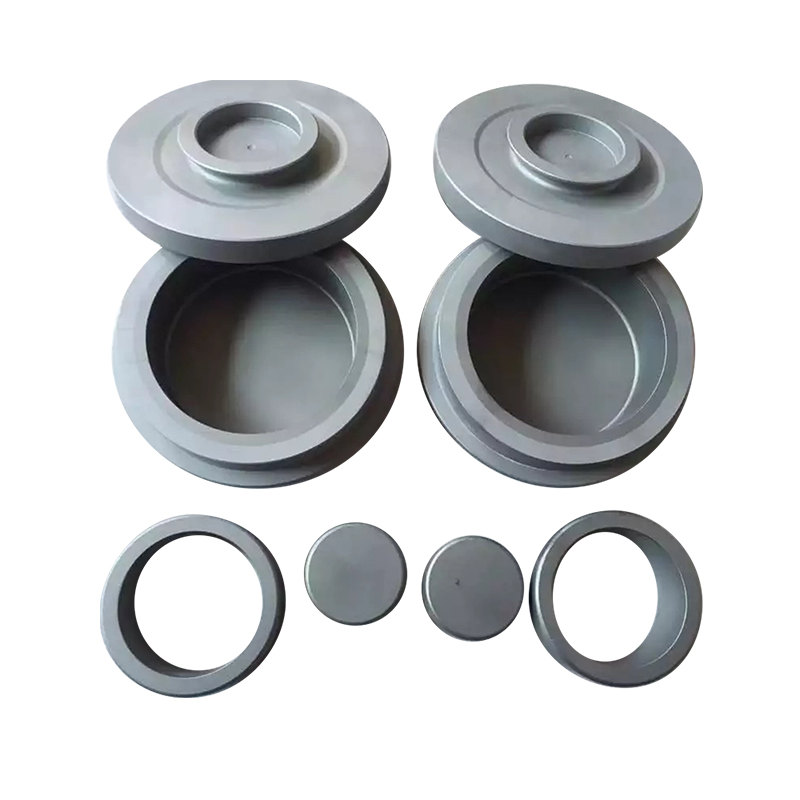
Qirun supplies wear-resistant high chromium grinding bowls for laboratory pulverizers used in mining, geological testing, and mineral sample preparation.
With high hardness and abrasion resistance, they are suitable for grinding quartz, iron ore, rocks, and cement clinker.
Available with matching grinding rings and pucks, our grinding bowls support OEM customization based on customer drawings and equipment requirements.
Parameter | Specification |
|---|---|
Product Name | High Chromium Grinding Bowl |
Brand | Qirun |
Material | High Chromium Alloy Steel |
Chromium Content | 10–14% |
Hardness | HRC 58–63 |
Manufacturing Process | Casting, Heat Treatment and Machining |
Heat Treatment | Quenching and Tempering |
Grinding Components | Bowl, Grinding Rings, Central Puck |
Equipment Type | Laboratory Pulverizer / Vibratory Cup Mill |
Sample Materials | Mineral Ores, Quartz, Rocks, Cement Clinker and Slag |
Application | Geological Testing, Mineral Assay, Laboratory Sample Preparation |
Customization | Bowl Dimensions, Component Configurations and OEM Drawings |
Compatibility | According to Pulverizer Model and Technical Dimensions |
Note: Material composition and hardness values are based on the currently published product specifications. Exact dimensions, capacity, equipment compatibility, and supplied components should be confirmed before ordering.
The grinding bowl is manufactured from high chromium alloy steel with a published hardness range of HRC 58–63.
Its hard alloy structure helps resist abrasion during repeated sample pulverizing operations.
This makes it suitable for grinding hard mineral samples where continuous contact with abrasive particles can cause significant wear.
The grinding bowl is designed for sample preparation involving materials such as:
Iron ore and mineral ores
Quartz and geological rocks
Cement clinker
Industrial slag
Selected brittle industrial materials
Actual grinding performance depends on sample hardness, particle size, grinding time, and pulverizer operating parameters.
Depending on the pulverizer design, the grinding assembly can include a bowl, concentric grinding rings, and a central puck.
During operation, these components move within the bowl and apply repeated impact, compression, and friction to the sample.
This arrangement supports the reduction of solid materials into finer particles for laboratory analysis.
Grinding component dimensions and configurations must match the selected pulverizer model.
The grinding bowl features a machined inner surface designed for repeated contact with grinding media and sample materials.
Appropriate surface finishing helps support sample discharge and routine cleaning between grinding cycles.
Regular inspection and cleaning remain important to minimize sample carryover and potential contamination.
Qirun supports customized grinding bowl manufacturing according to customer equipment specifications.
Key dimensions can include:
Bowl inner diameter and depth
External diameter and overall height
Grinding ring dimensions
Central puck dimensions
Mounting and clamping surfaces
Required machining tolerances
All custom specifications should be reviewed against the pulverizer's mechanical and operating requirements before production.
Material selection affects grinding bowl wear resistance, maintenance requirements, and potential sample contamination.
High chromium alloy steel combines a hard metallic structure with wear-resistant alloy constituents.
The published chromium content of 10–14% and hardness of HRC 58–63 make this grinding bowl an option for abrasive mineral sample preparation.
Material | Key Characteristics | Selection Considerations |
|---|---|---|
High Chromium Steel | High hardness and abrasion resistance | Hard, abrasive mineral samples |
65Mn Steel | Heat-treatable steel with useful strength and wear properties | Applications requiring a different toughness and wear balance |
Tungsten Carbide | Very high hardness and excellent abrasion resistance | Highly abrasive samples; higher material cost |
Ceramic Materials | Depending on composition, high hardness and chemical stability | Applications with specific contamination requirements |
The appropriate grinding bowl material should be selected based on the sample composition, pulverizer compatibility, required particle size, and analytical method.
Qirun provides manufacturing support for replacement grinding bowls and associated wear-resistant components.
Customers can submit pulverizer model information, dimensional drawings, or existing component specifications for technical review.
High chromium alloy material specifications
Grinding bowl dimensions and cavity geometry
Matching grinding rings and puck dimensions
Machining of mounting and contact surfaces
Custom replacement parts according to drawings
Quality inspection requirements agreed before production
Please provide the following information:
Pulverizer manufacturer and model
Existing grinding bowl dimensions or drawings
Required bowl capacity, if applicable
Grinding ring and puck configuration
Preferred material grade and hardness
Required quantity
Sample materials and application requirements
This information allows our team to review manufacturing feasibility and component compatibility.
Looking for a wear-resistant grinding bowl for your laboratory pulverizer?
Qirun supplies high chromium grinding bowls and customized replacement grinding components for mining, geological, cement, and industrial laboratory applications.
Contact us with your pulverizer model, grinding bowl dimensions, technical drawings, or material requirements.
We can help review your specifications and provide a quotation for suitable replacement components.
Email: vip@qrcrusher.com
Request a Quote | Submit Your Drawings