- All
- Product Name
- Product Keyword
- Product Model
- Product Summary
- Product Description
- Multi Field Search


| Material: | |
|---|---|
| Color: | |
| Size: | |
| Quantity: | |
C120
QR
002
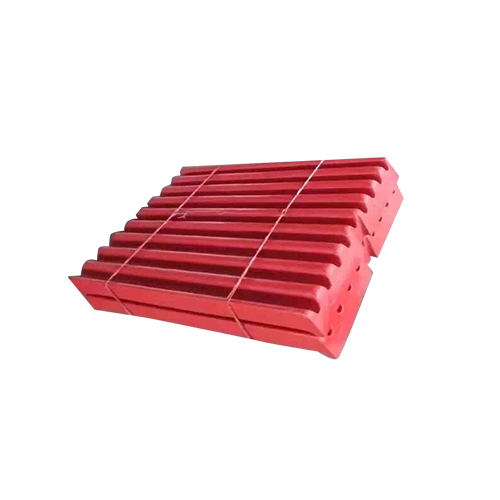
Qirun supplies Mn18Cr2 high manganese steel jaw plates for mining, quarrying, and aggregate crushing equipment. Available as fixed and swing jaw plates, these wear-resistant castings are designed to withstand repeated impact, compression, and abrasion during primary crushing.
Mn18Cr2 manganese steel combines high impact toughness with work-hardening capability, making it suitable for crushing hard rock and abrasive mineral materials.
Qirun supports OEM replacement jaw plates with customized tooth profiles, dimensions, and mounting configurations based on customer drawings and crusher requirements.
Parameter | Specification |
|---|---|
Product Name | Mn18Cr2 Manganese Steel Jaw Plates |
Brand | Qirun / QR |
Product Model | C120 (Published Model; Compatibility to Be Confirmed) |
Product Code | 002 |
Main Material | ZGMn18Cr2 High Manganese Steel |
Alternative Materials | Mn13Cr2, Mn22Cr2 |
Base Hardness | HB 180–220 (Published Range) |
Published Tensile Strength | ≥685 MPa |
Plate Types | Fixed Jaw Plate, Swing Jaw Plate |
Product Category | Jaw Crusher Wear Parts |
Main Properties | Impact Toughness, Work Hardening, Wear Resistance |
Tooth Profiles | Corrugated, Toothed or Custom Profiles |
Size | Customized According to Drawings |
Manufacturing | Casting, Heat Treatment and Machining as Required |
Applications | Mining, Quarrying, Aggregate Production |
OEM Support | Custom Dimensions, Materials and Replacement Parts |
Quality Inspection | Material and Dimensional Inspection as Agreed |
The hardness and tensile strength values are from the existing product information. Actual specifications and compatible crusher models should be confirmed against the selected material grade and technical drawings.
Mn18Cr2 high manganese steel is designed for wear components subjected to repeated crushing loads.
Its austenitic structure provides toughness that helps jaw plates withstand impact and compression during primary crushing operations.
This material is suitable for demanding applications involving hard rock and mineral feed materials.
High manganese steel can develop increased surface hardness under repeated impact and compressive loading.
This work-hardening behavior helps the crushing surface resist wear while the underlying material retains toughness.
Actual wear resistance depends on material composition, heat treatment, rock abrasiveness, and operating conditions.
Qirun supplies jaw plate configurations for stationary and movable crushing surfaces.
Fixed Jaw Plate
The fixed jaw plate is installed on the stationary side of the crusher chamber. It provides the opposing surface against which feed material is compressed.
Swing Jaw Plate
The swing jaw plate is mounted on the moving jaw assembly. Its reciprocating movement creates the compressive force needed to fracture incoming rock.
Both components require suitable tooth geometry, mounting dimensions, and material properties for reliable operation.
Jaw plate tooth profiles affect material gripping, crushing chamber behavior, and wear distribution.
Qirun supports manufacturing according to customer-specified profiles, including:
Corrugated tooth surfaces
Coarse crushing teeth
Custom tooth pitch and height
Customer-specified crushing surface geometry
Replacement profiles based on technical drawings
Final tooth geometry should match the intended crusher configuration and operating conditions.
Qirun supports replacement jaw plate production for mining and quarry crushing equipment.
Customers can submit original part numbers, technical drawings, or existing component specifications for manufacturing review.
Custom requirements may include plate dimensions, tooth profiles, installation surfaces, and manganese steel grades.
Mn18Cr2 is a chromium-alloyed high manganese steel grade commonly used for impact-resistant crusher wear parts.
Qirun also lists Mn13Cr2 and Mn22Cr2 as alternative material specifications.
Material Grade | Carbon (C) | Manganese (Mn) | Chromium (Cr) | Silicon (Si) |
|---|---|---|---|---|
ZGMn13Cr2 | 0.9–1.3% | 11.0–14.0% | 1.5–2.5% | 0.3–1.0% |
ZGMn18Cr2 | 1.1–1.5% | 16.5–19.0% | 1.5–2.5% | ≤0.8% |
ZGMn22Cr2 | 1.1–1.4% | 20.0–22.0% | 1.5–2.5% | ≤0.8% |
These are the published chemical composition ranges. Final material requirements should follow the agreed product specification.
Material | Main Characteristics | Application Considerations |
|---|---|---|
Mn13Cr2 | Impact toughness and work-hardening capability | Suitable for selected impact-intensive crushing |
Mn18Cr2 | Combination of toughness and wear resistance under suitable loads | Hard rock and abrasive mining applications |
Mn22Cr2 | Higher nominal manganese content | Selected demanding conditions requiring material evaluation |
Higher manganese content does not automatically result in longer wear life. Crushing pressure, feed properties, alloy chemistry, and heat treatment influence actual performance.
Qirun provides customized jaw crusher wear part manufacturing based on customer requirements.
Our services can include:
Mn18Cr2 manganese steel casting
Mn13Cr2 and Mn22Cr2 material alternatives
Fixed and swing jaw plate production
Customized crushing tooth geometry
Manufacturing according to OEM drawings
Machining of specified mounting surfaces
Inspection based on agreed technical requirements
Please provide:
Jaw crusher manufacturer and model
Fixed or swing jaw plate requirement
Original part number, if available
Technical drawing or component dimensions
Required manganese steel grade
Tooth profile and installation requirements
Order quantity and delivery destination
These details help Qirun review the replacement specification and manufacturing requirements.
Looking for Mn18Cr2 manganese steel jaw plates for mining or quarry crushing equipment?
Qirun supplies fixed and swing jaw plates with customized material grades, tooth profiles, and replacement dimensions.
Send us your crusher model, original part number, or technical drawings to discuss OEM manufacturing and replacement wear part requirements.
Email: vip@qrcrusher.com
Request a Quote | Send Your Drawings