
- All
- Product Name
- Product Keyword
- Product Model
- Product Summary
- Product Description
- Multi Field Search
Views: 0 Author: Site Editor Publish Time: 2026-02-04 Origin: Site
Jaw crushers are essential machines in primary crushing, yet their designs are often misunderstood. Many readers search for the three types of jaw crushers to understand how these machines really differ. In this article, you will learn how jaw crushers are classified by structure and working principles, not by brands or models.
Single toggle jaw crushers use a mechanically streamlined design to convert rotary motion into effective compressive force. The eccentric shaft drives the movable jaw through a single toggle plate, creating an elliptical jaw movement rather than a straight-line stroke. This elliptical trajectory allows the jaw to press material inward while also drawing it downward, so crushing and material flow occur simultaneously. As a result, breakage efficiency remains high even with a relatively compact machine structure.
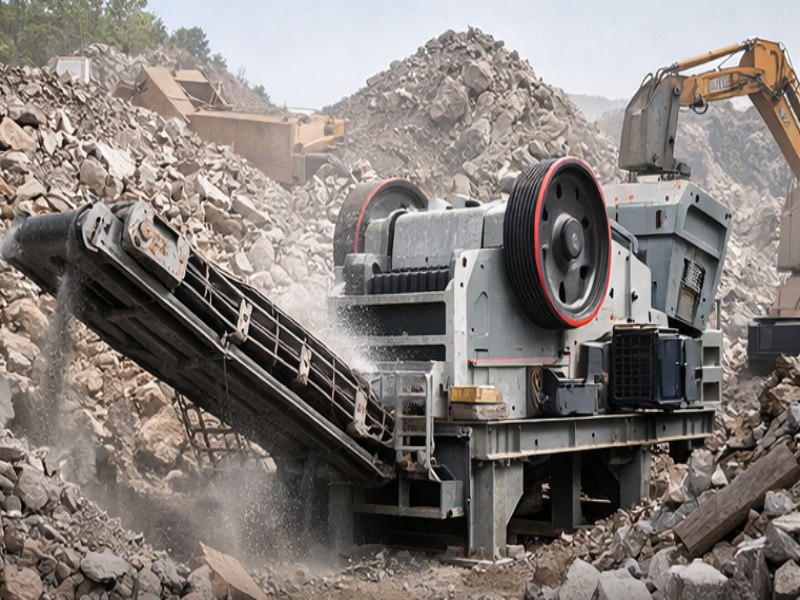
From a force transmission perspective, the entire crushing load passes through one toggle plate. This component transfers motion and also acts as a protective element under abnormal stress. When material enters the crushing chamber, it is compressed between the fixed and moving jaws. Force gradually increases as the jaw closes, causing the rock to fracture along natural weakness planes. Once the jaw opens, gravity assists discharge: smaller fragments move downward and exit, while larger pieces stay in the chamber for additional cycles. This repeated compression–release process defines the core working principle of single toggle jaw crushers.
Key mechanical characteristics that shape this process include:
● The elliptical jaw motion, which improves grip on material and reduces slippage during crushing.
● A lighter moving mass compared with multi-toggle designs, allowing higher operating speeds.
● Concentrated wear zones near the lower jaw area due to combined compression and sliding action.
These characteristics influence both performance and maintenance behavior, as summarized below.
Aspect | Single Toggle Jaw Crusher Behavior |
Jaw motion | Elliptical, combining compression and slight shear |
Force transfer | Through a single toggle plate |
Crushing cycle | Progressive compression with gravity-assisted discharge |
Wear pattern | More localized near the discharge zone |
Energy use | Generally lower due to simpler moving structure |
In practical operation, this design achieves a balance between crushing efficiency and mechanical simplicity. The reduced number of moving components limits friction losses and makes the machine easier to maintain, while the elliptical motion ensures consistent size reduction for many common rock types. For primary crushing tasks where reliability, throughput, and energy efficiency are key considerations, the working principle of single toggle jaw crushers remains both practical and widely adopted.
In practical applications, single toggle jaw crushers are most commonly used for medium-hard materials and general aggregate processing. Their design suits limestone, sandstone, and similar materials where extreme crushing force is not the primary requirement. Because the structure uses fewer moving parts than other jaw crusher types, it is often preferred in operations where mechanical simplicity and operational stability are valued over maximum force output.
Single toggle jaw crushers are also well suited to installations that require lighter equipment and more flexible layouts. Their relatively compact frame and lower overall weight make them easier to integrate into mobile or semi-mobile crushing plants. In addition, many operations favor this type when energy efficiency and throughput are priorities, as the reduced mass of moving components typically results in lower power consumption per ton of material processed.
Application factor | Relevance to single toggle jaw crushers |
Material hardness | Best suited for medium-hard and non-abrasive materials |
Structural complexity | Simple design with fewer mechanical components |
Energy efficiency | Lower power demand due to lighter moving parts |
Throughput focus | Designed for steady, high-volume primary crushing |
Single toggle jaw crushers operate with a relatively simple but efficient mechanical structure. The movable jaw is connected to a single toggle plate, which transfers motion from the eccentric shaft. As the shaft rotates, the swing jaw follows an elliptical movement pattern rather than a straight line, allowing the material to be simultaneously compressed and slightly sheared during each crushing cycle. This combined motion improves breakage efficiency for many common rock types while keeping the overall mechanism compact.
From a force perspective, crushing energy is generated through one toggle plate that acts as both a motion transmitter and a safety component. When material enters the crushing chamber, it is pressed between the fixed jaw and the moving jaw. The force increases as the jaw closes, breaking the material along its natural fracture lines. Once the jaw opens, gravity and the jaw profile guide the crushed material downward toward the discharge opening, where smaller particles exit while larger pieces remain for further crushing. This continuous compression–release cycle defines the working principle of single toggle jaw crushers.
In practical applications, single toggle jaw crushers are most commonly used for medium-hard materials and general aggregate processing. Their design suits limestone, sandstone, and similar materials where extreme crushing force is not the primary requirement. Because the structure uses fewer moving parts than other jaw crusher types, it is often preferred in operations where mechanical simplicity and operational stability are valued over maximum force output.
Single toggle jaw crushers are also well suited to installations that require lighter equipment and more flexible layouts. Their relatively compact frame and lower overall weight make them easier to integrate into mobile or semi-mobile crushing plants. In addition, many operations favor this type when energy efficiency and throughput are priorities, as the reduced mass of moving components typically results in lower power consumption per ton of material processed.
Application factor | Relevance to single toggle jaw crushers |
Material hardness | Best suited for medium-hard and non-abrasive materials |
Structural complexity | Simple design with fewer mechanical components |
Energy efficiency | Lower power demand due to lighter moving parts |
Throughput focus | Designed for steady, high-volume primary crushing |
Hydraulic jaw crushers combine traditional jaw crushing mechanisms with integrated hydraulic systems to improve control, safety, and operational flexibility. Mechanically, the crushing action is still generated by the interaction between a fixed jaw and a moving jaw driven by an eccentric shaft. The key difference lies in how hydraulic cylinders are used to support, adjust, and protect the crusher rather than relying solely on manual or mechanical adjustment components.
One of the most important functions of the hydraulic system is the adjustment of the closed side setting (CSS). Instead of stopping the machine and inserting shims or manually resetting components, operators can adjust the CSS hydraulically, often while the crusher is idle or even during operation, depending on design. This allows faster response to changes in material size requirements and helps maintain consistent product output. In addition, hydraulic jaw crushers are equipped with overload protection systems. When uncrushable materials such as metal enter the chamber, hydraulic pressure automatically increases, triggering relief valves that open the jaw momentarily to release the load and prevent structural damage. Once the overload is cleared, the system resets automatically, minimizing downtime.
Hydraulic jaw crushers are commonly used in operations where precise control and frequent adjustments are required. Processing environments that handle variable feed sizes or demand tight control over output gradation benefit from the ability to fine-tune CSS quickly and safely. This makes hydraulic systems particularly valuable in operations that prioritize process stability and consistent downstream performance.
These crushers are also well suited for sites with strict safety, automation, or compliance requirements. The reduced need for manual intervention lowers operational risk, while automated overload protection enhances equipment reliability. As a result, hydraulic jaw crushers are frequently found in laboratory-scale setups, construction projects with changing material profiles, and modern processing plants that integrate monitoring and automation technologies into their crushing workflows.
Operational requirement | Advantage of hydraulic jaw crushers |
CSS adjustment | Fast, precise, and often tool-free |
Overload protection | Automatic relief and self-resetting |
Safety level | Reduced manual handling and intervention |
Operational flexibility | Suitable for variable feed conditions |
Overall, hydraulic jaw crushers represent an evolution in jaw crusher design, focusing on control, protection, and adaptability rather than purely mechanical force. Their ability to respond quickly to changing operating conditions makes them a practical choice for modern crushing environments where efficiency and safety must be balanced.
Although all jaw crushers rely on compressive force, the way this force is generated and transferred to the material differs fundamentally between single toggle, double toggle, and hydraulic designs. Single toggle jaw crushers use an elliptical motion, where the swing jaw both presses and slightly drags material downward during each cycle. This creates a combined compression-and-shear effect that suits many standard crushing tasks without excessive mechanical complexity.
Double toggle jaw crushers, by contrast, apply force through a more linear crushing motion. The two-toggle mechanism converts shaft rotation into a straight-line movement of the jaw, allowing force to be distributed more evenly across the crushing chamber. Hydraulic jaw crushers retain either single or double toggle mechanics at their core, but the force transmission is supplemented by hydraulic cylinders. These systems do not primarily increase crushing force; instead, they regulate how force is applied, absorbed, and released, especially when abnormal loads occur.
Crusher type | Jaw motion pattern | Force transmission characteristic |
Single toggle | Elliptical movement | Direct force via one toggle, combined compression and shear |
Double toggle | Near straight-line movement | Evenly distributed compression through dual toggles |
Hydraulic | Depends on base mechanism | Controlled force with hydraulic absorption and relief |
From a maintenance perspective, structural complexity plays a major role in how frequently jaw crushers require attention. Single toggle jaw crushers have fewer moving components, which generally translates into simpler inspection routines and shorter maintenance intervals. Adjustments to settings are typically mechanical, requiring manual intervention and planned downtime.
Double toggle jaw crushers introduce additional joints and components, increasing durability but also adding mechanical interfaces that must be monitored over time. Hydraulic jaw crushers change this dynamic by shifting adjustment and protection tasks to hydraulic systems. Closed side setting (CSS) adjustments can often be performed with minimal physical intervention, and overload events are handled automatically through pressure relief. This reduces both maintenance-related downtime and operator exposure to mechanical risks, even though hydraulic systems themselves require specialized servicing.
Material characteristics are often the deciding factor when comparing jaw crusher types for primary crushing. Single toggle jaw crushers are generally well suited for medium-hard, less abrasive materials, where efficiency and throughput matter more than maximum compressive strength. Double toggle jaw crushers are favored when dealing with very hard or abrasive rock, as their even force distribution and robust structure help manage wear under demanding conditions.
Hydraulic jaw crushers offer greater adaptability across varying material profiles. While they may not always exceed double toggle crushers in raw crushing force, their ability to adjust settings quickly and respond to uncrushable objects makes them suitable for operations handling inconsistent feed or requiring tighter process control. This explains why, even within primary crushing stages, different jaw crusher types are selected based on how material hardness, abrasiveness, and operational stability intersect rather than on a single performance metric.
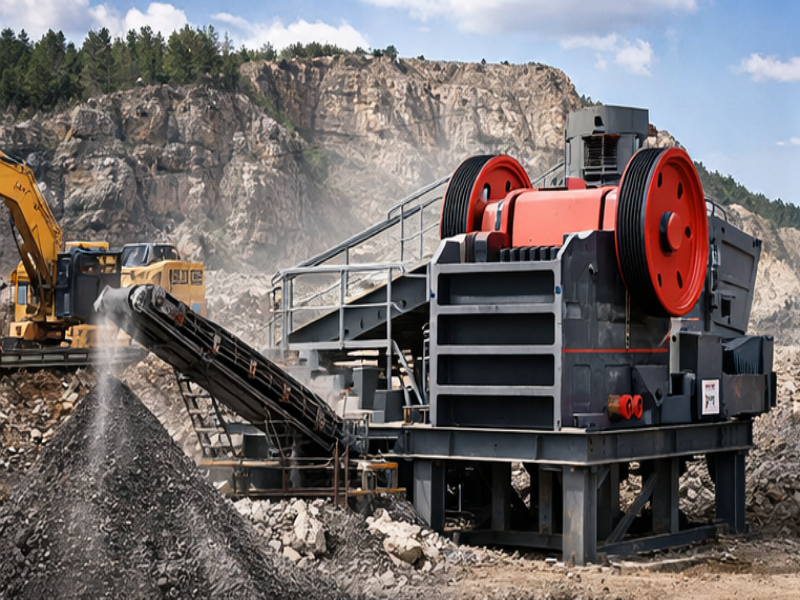
This article explains how jaw crushers differ by structure, motion, and force transmission. Single, double, and hydraulic designs each serve distinct crushing needs. No single jaw crusher fits every application or material condition. Understanding these differences supports better operational decisions and long-term efficiency. Shuangfeng Qirun Machinery Parts Imp&Exp Co., Ltd. delivers reliable jaw crusher solutions that enhance durability, performance stability, and professional service value.
A: Jaw crushers are grouped into single toggle, double toggle, and hydraulic types based on motion and force control.
A: Jaw crushers differ by jaw movement and force transmission, affecting compression style and material flow.
A: Jaw crushers for hard rock usually use double toggle or hydraulic designs for stable force handling.
A: Jaw crushers are mainly primary machines but can serve secondary roles with suitable feed sizes.
A: Jaw crushers use mechanical shims or hydraulic systems to set discharge size and control output.


