
- All
- Product Name
- Product Keyword
- Product Model
- Product Summary
- Product Description
- Multi Field Search
Views: 0 Author: Site Editor Publish Time: 2026-02-04 Origin: Site
Ever wondered how huge rocks become usable? A stone crusher breaks them into smaller pieces. It is key for mining and construction work.
In this article, you will learn how it works. We will explain its function and practical uses.
At its most fundamental level, a stone crusher is designed to reduce large, solid rock into smaller, usable materials through mechanical force. Raw stone extracted from quarries or mining sites is often too large, heavy, and irregular to be handled or used directly. By applying compression, impact, or a combination of forces, a stone crusher breaks this material down into gravel, aggregate, sand, or fine particles that meet practical size requirements. This transformation is not random; the process is controlled to ensure that the output meets specific industrial or construction standards. Consistent particle size and shape are critical, as they determine how the material can be handled, transported, and used downstream. Without this step, large rocks would remain a logistical obstacle rather than a valuable resource.
From an operational perspective, the stone crusher serves as the bridge between raw geological material and engineered construction inputs. It standardizes irregular stone into consistent sizes and shapes, allowing for seamless integration into concrete mixes, road base layers, and other structural applications. By controlling both particle size and gradation, the crusher ensures that aggregates perform predictably in terms of compaction, load-bearing capacity, and drainage, which is essential for long-term structural stability.
Common output forms produced by a stone crusher include:
● Coarse aggregates: Used as base layers, foundations, or sub-grade material for roads. These provide structural support and distribute loads evenly.
● Medium-sized gravel: Suitable for drainage systems, landscaping, and as filler in concrete mixes. These particles facilitate water flow and improve compaction efficiency.
● Fine aggregates and sand: Essential for concrete, asphalt, and mortar mixes where uniform particle size ensures strength and durability.
● Stone fines: Ideal for leveling surfaces, filling gaps, and providing compaction layers in construction and civil works.
Output Type | Typical Size Range | Common Use Cases |
Coarse aggregate | 20–60 mm | Road base, foundations |
Medium gravel | 5–20 mm | Drainage, concrete |
Fine aggregate | <5 mm | Asphalt, mortar |
Stone fines | <2 mm | Compaction, leveling |
Beyond mere size reduction, stone crushing directly supports efficiency and control in real-world projects. Large, unprocessed stone is difficult to transport, store, and position accurately. By reducing stone to standardized sizes, a stone crusher enables easier handling with conveyors, loaders, and trucks, reducing delays and unnecessary labor. This controlled sizing also enhances predictability, allowing engineers and project managers to plan material usage more precisely and maintain tight tolerances in construction specifications.
Crushing also ensures that raw stone meets functional requirements for various applications. For instance, concrete production relies on aggregates with consistent size and shape to guarantee strength, workability, and durability. Similarly, road construction depends on well-graded material to ensure stability, even load distribution, and long-lasting performance. By producing aggregates that meet these requirements, a stone crusher minimizes waste, avoids additional processing steps, and optimizes material efficiency.
Effective crushing provides multiple practical benefits for project execution:
● Improved material flow: Standardized particle sizes enhance efficiency in screening, batching, and mixing operations.
● Reduced transportation costs: Smaller, uniform stones are easier to transport, reducing vehicle load limits and handling requirements.
● Compliance with construction standards: Consistent aggregates help projects meet regulatory and engineering specifications.
● Sustainable material reuse: Stone from demolition or excavation can be crushed and reintegrated into new projects, reducing the need for virgin material and minimizing environmental impact.
Taken together, these outcomes illustrate why stone crushers are foundational in mining, construction, and infrastructure projects. They do more than break rock; they transform raw geological material into functional, high-value resources that can be reliably applied across multiple applications. This versatility, combined with precise control over output size and quality, makes stone crushers indispensable for efficient and sustainable project execution.
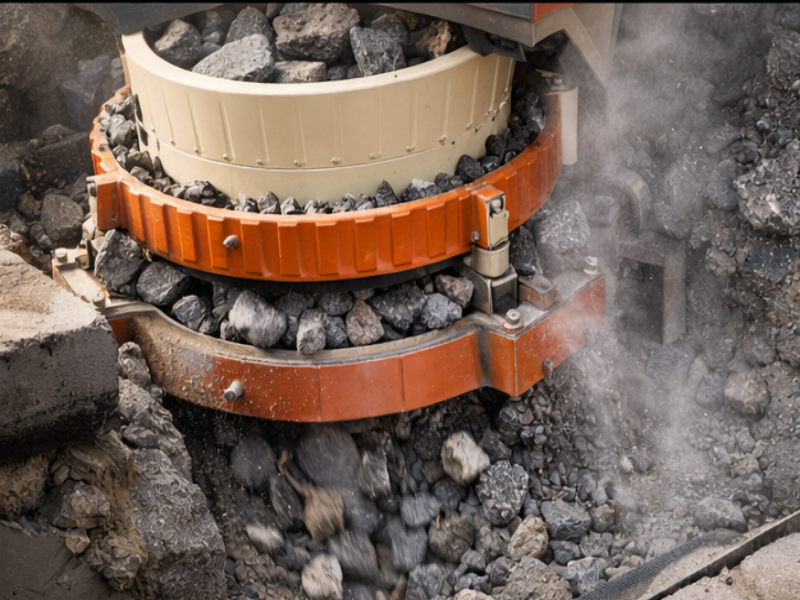
A stone crusher is engineered to reduce large rocks into smaller, usable materials by applying mechanical forces. The two main mechanisms for breaking stone are compression and impact, each suited to specific material types and desired outcomes. Compression-based crushers, including jaw and cone crushers, crush rocks by squeezing them between fixed and moving surfaces, causing the rock to fracture along natural weaknesses. This approach is highly effective for hard, dense stones such as granite and basalt. Impact crushers, by contrast, employ high-speed rotors or hammers to strike stones, converting kinetic energy into fracturing force. This produces more uniform, cubical fragments and works best on medium-hard or softer stones. Understanding these operational principles allows operators to predict particle size, control output, and adjust machine parameters for consistent performance across projects.
The forces at play in a stone crusher include:
● Compressive Force: Static pressure fractures rocks along natural planes, ideal for primary crushing and large block reduction.
● Impact Force: Kinetic energy applied via rotors or hammers breaks stones into finer, more uniform pieces.
● Shear and Attrition: Some crushers incorporate slicing or rubbing actions to improve particle shape and surface texture, particularly important for construction-grade aggregate.
Proper management of these forces ensures that crushers operate efficiently, maintain predictable throughput, and reduce excessive wear on critical components such as jaw plates, liners, and hammers.
The crushing process begins with feeding raw rock into the crusher’s hopper. The size, shape, and consistency of the feed influence crushing efficiency and the resulting particle size distribution. In the primary stage, large rocks are broken down by jaw or gyratory crushers into manageable sizes. The partially processed material then moves to secondary and tertiary stages, which refine particle size and shape to meet the precise specifications required for concrete, asphalt, road base, and other industrial applications. Crusher settings, including gap width, rotor speed, and impact energy, are adjusted to control the final discharge, ensuring uniform, project-ready aggregate.
Key stages in material flow include:
● Feeding: Rocks are loaded into the hopper and directed toward the crushing chamber for initial processing.
● Primary Breakage: Oversized blocks are fractured into smaller pieces, facilitating transport and subsequent processing.
● Secondary/Tertiary Reduction: Additional crushing stages refine particle size and produce consistent shapes for construction or industrial requirements.
● Discharge: Crushed material exits via conveyor or chute, ready for screening, sorting, or direct placement in project applications.
Practical considerations for efficiency include:
● Maintaining a consistent feed rate to prevent blockages and uneven output.
● Monitoring wear components such as jaw plates, liners, and hammers to sustain performance and reduce downtime.
● Using vibrating feeders and screens to regulate material flow and separate finished products by size for precise application.
Stage | Purpose | Typical Output Size |
Primary Crushing | Reduce oversize rocks | 150–100 mm |
Secondary Crushing | Refine size and shape | 40–20 mm |
Tertiary Crushing | Produce fine aggregates | 5–10 mm |
Screening & Sorting | Separate material by size for end-use | Various fractions |
By effectively managing crushing forces and material flow, a stone crusher produces predictable, uniform output suitable for mining, construction, and industrial projects. Proper operation ensures that materials meet project specifications, reduce handling costs, and enhance overall efficiency. Integrating crushers with conveyors, vibrating screens, and automated feeders can further optimize throughput, minimize downtime, and provide consistent, high-quality aggregate for diverse applications.
In mining operations, a stone crusher is essential for preparing raw ore and rock for further processing. Large rocks and boulders extracted from quarries or open-pit mines are initially too cumbersome to transport or process efficiently. By breaking these stones into smaller, more uniform sizes, the crusher enables easier handling, storage, and transport to downstream processing equipment such as grinders, mills, or separators. This stage ensures that minerals can be extracted efficiently, reducing operational delays and maximizing recovery rates.
Key operational benefits in mining include:
● Enhanced throughput: Smaller, uniform particles move more easily through conveyors and feeders, maintaining continuous operation.
● Reduced wear on equipment: Pre-crushed material minimizes stress on mills and grinding systems, lowering maintenance costs.
● Controlled particle size: Consistency in crushed stone ensures optimal separation and extraction of valuable minerals.
Material Type | Common Crusher Used | Purpose in Mining |
Hard rocks (granite, basalt) | Jaw Crusher | Primary crushing for manageable size |
Medium-hard ore | Cone Crusher | Secondary crushing for precise particle size |
Soft ores | Impact Crusher | Fine crushing and shaping for processing |
Stone crushers in mining are not only tools for size reduction but also serve as a critical link in ensuring material quality, handling efficiency, and overall plant productivity.
In construction, stone crushers provide aggregates that form the backbone of infrastructure projects, including roads, bridges, and buildings. Crushed stone serves as a base layer, structural fill, and component in concrete or asphalt mixes. The consistency in size and shape produced by modern crushers allows engineers to design durable and stable structures with predictable performance.
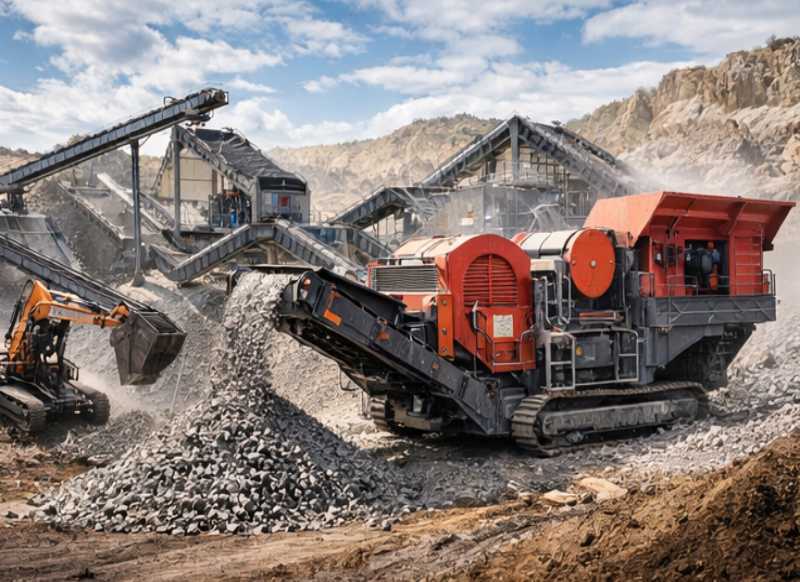
Practical applications in construction include:
● Road construction: Crushed stone provides strong sub-base and surface layers, ensuring load-bearing capacity and stability.
● Concrete and asphalt production: Uniform aggregates improve mix quality and structural integrity.
● Foundations and drainage systems: Properly sized stone ensures compaction, water flow, and foundation longevity.
Aggregate Type | Typical Size Range | Application Example |
Coarse aggregate | 20–60 mm | Road base, foundation layers |
Medium aggregate | 5–20 mm | Concrete and asphalt mixes |
Fine aggregate | <5 mm | Mortar, leveling layers |
By converting raw rock into standardized materials, stone crushers enable sustainable construction practices, reduce transportation challenges, and allow efficient reuse of natural and recycled stone on-site. This versatility makes them indispensable for contractors and infrastructure developers alike.
The type of rock being processed directly impacts the effectiveness of crushing and the quality of the output. Hard rocks like granite or basalt require high compressive forces and durable components to fracture efficiently, while softer rocks such as limestone or sandstone are easier to crush but may generate more fines if the crusher is not properly adjusted. Abrasive materials accelerate wear on jaws, hammers, and liners, affecting both maintenance schedules and operational efficiency. Understanding these characteristics helps operators choose the correct crusher type and optimize performance for consistent output.
Key factors include:
● Hardness: Determines the level of force required and suitable crusher type.
● Abrasiveness: Influences wear rates and the need for robust liners.
● Moisture content: Wet or clay-rich stones can reduce efficiency and may require pre-treatment.
The desired particle size significantly influences how a stone crusher is operated. Crushers are adjusted—through discharge gap, rotor speed, or impact energy—to achieve specific size ranges. Fine aggregates often require secondary or tertiary crushing, while coarse material may only need primary crushing. Maintaining consistent output size is essential for construction quality, concrete mix ratios, and industrial applications. Proper screening and sorting can further refine the output and ensure compliance with project specifications.
Rock Type | Hardness & Abrasiveness | Recommended Crusher Type | Target Output Size | Common Use Case |
Granite | High, very abrasive | Jaw or Gyratory | 20–60 mm | Road base, structural fill |
Basalt | High, abrasive | Cone or Jaw | 20–50 mm | Durable aggregate, foundations |
Limestone | Medium, low abrasive | Impact or Cone | 5–20 mm | Concrete, asphalt aggregates |
Sandstone | Low, minimal abrasive | Impact | <5 mm | Mortar, leveling, fine construction |
By considering material hardness, abrasiveness, and required output size, operators can optimize crusher performance, reduce wear, and produce consistent, high-quality aggregates suitable for both mining and construction projects.
A stone crusher reduces large rock into usable material. Output depends on rock hardness and desired size.
Shuangfeng Qirun Machinery Parts Imp&Exp Co., Ltd. provides crushers that ensure efficient, consistent results. Their products enhance productivity and project value.
A: A stone crusher reduces large rocks into smaller, usable materials for mining, construction, and aggregate production.
A: Common types include jaw crushers, cone crushers, impact crushers, and gyratory crushers, each suited for different rock hardness and output requirements.
A: The target output size depends on crusher settings, feed size, and the rock's hardness, ensuring consistent material for construction or industrial use.
A: Stone crushers are used in quarries, mining operations, and construction projects to produce aggregates, sand, and other construction materials.


